
Sunday, March 7, 2021

Monday, February 24, 2020
A Committed Maker
I heard my colleague say she was a committed maker when asked if she had taken a break for lunch. Being a maker IS all about commitment because it is all about seeking success after multiple iterations. While I don't encourage missing a meal for making, I do love it when you are so in the zone that the pull of the world around you dissolves into the background. Without commitment, we graze from project to project without fulfilling the completion of a task or a goal. Where is the satisfaction in that? Recently we were attempting to make heat-activated slime. When the heat from little hands kneads the dough, it changes colors. We did this in small groups and while some groups were successful on the first or second go, other groups required more stirring, more specific ingredients, or just more time.
 What's the lesson in this? Well, resilience can be built in the unlikeliest of places, one of which is in a slime making laboratory. While watching some peers succeed early on, others are trained to not give up despite the lack of success on the initial try. Resilience breeds commitment. When plans don't go as anticipated, we learn to hang in there. It may ultimately work out. I love the lesson in this. It teaches us when to have a stronger understanding of when to alter course and when to remain on the same path. If third graders don't start building up their well of resilience to see something through until the end, when will they learn the power of patience?

Wednesday, October 30, 2019
The Innovator's Mindset and How We Were Inspired to Blog
I read The Innovator's Mindset by George Couros from cover to cover. It was excellent! There were a few points that really resonated with me. But, before I get into all of that, I want to share what I was thinking as I started the book. First, I was thinking about how as a faculty, many of us chose this book for our PD this year and I was questioning how it would be received. I was looking over the list of faculty that selected to read The Innovator's Mindset and felt a twinge of surprise. I was surprised because the educators who signed up to read the book are all individuals that I would consider change agents. They are all open-minded, willing to learn and grow with and from one another, and many are already considered "connected educators". I was feeling a bit surprised that they would be inspired to read about innovation. While I recognize that while everyone can learn something from anything or anyone, this group is already pretty open to innovation and introspective about their teaching and learning practices. And then I had a mind shift that made me view it all very different. I got to the end of the book where George mentions that in learning we should nurture what we already do well and the rest will fall into place. For example, if your passion is tinkering with technology, learning to write within the field of technology remains important but you can learn how to write with the emphasis being on the topic of technology. Sharing the process for a technology project via a blog requires a written component that we may feel inspired to disseminate to a wider audience. This made me rethink the way that I had thought about the educators that chose to read this particular book. They are already considered innovators and yet are focused on continuing to nurture a skillset and a mindset. Ultimately, George made me see the power in their book choices.
In The Innovator's Mindset, George also explores the power of blogging. There is power in blogging. Blogging creates the platform to share one's work with a larger audience. Blogging forces us to pause and reflect on our work and to discover our own voice. Blogging is another way for an introvert to express themselves. Blogging is a convenient way for others to learn and benefit from what you are doing and thinking. With all that in mind, I decided to launch the 7th grade technology exploratory class this morning with a blogging activity. Instead of sharing our morning reflections verbally, we shared digitally. It was not easy to get used to writing in this fashion and I often got the question, "Does this have to be in MLA format?". We continue to learn how to tailor our writing to our intended audiences and understand how to toggle between formal and informal types of writing. With all of this in mind, it is with great pleasure that I share these student blog posts with the world. Lately, we have been asking them to write more about their project work and their processes but today we were writing for the purpose of being introspective about ourselves, in general. Below are the topics from which they chose to write:

Recently, I was selected to be on B Team Basketball at the Davis Academy. Since I’m a 7th grader I am playing on my level but I know it will be a fun season. We had our first practice on Monday, but I missed that practice due to football. Anyways, my first practice was Tuesday of this week (October 29). It was a normal practice like any practice but then we had to get on the BaseLine and run suicides (That is a running drill). Everyone got two free throws to shoot. If you missed the first one it was a suicide, 1 out of 2 baseline to other baseline, and 2 out of 2 we didn’t have to run. Most of us missed our free throws so we had to run suicides. When I got up to the free throw line I made both of my free throws so we didn’t have to run. My coach said, “ If Jake makes this free throw we don’t have to run anymore but if he misses we have to run double.” Next thing you know I made the shot and we didn’t have to run anymore. That was an experience that I felt good about myself.
I have three objects that I cannot live without because they are so close to me that I am attached to them. The first one is my phone because when I need to call someone I can, and when I am bored I will play games to scare away being bored. The second most important thing to me is my dog because he always snuggles me when I need it and he plays with me when I want to be active. The last thing that is close to me is my Xbox because I always play it when I am bored and usually my friends are on so I can play with them.
My 3 most valued objects are my computer because it is great to use when on the go and I take care of it well. Also, it is great to use when I am bored. Next, I love my dog. I go on walks with her. I feed her sometimes and she is really fun to play with. Lastly, board games and video games. They are great to use when really bored and I am at home or with a friend.
An amazing experience I had was when I scored the winning goal in a soccer tournament. The score was 0-0 and there were 2 minutes left in the game. Our defender dribbled down the sideline and crossed the soccer ball to me. I got the ball took a touch and shot. The soccer ball went straight into the top corner and the goalie had no chance. That is how I scored the winning goal in my soccer tournament.
In The Innovator's Mindset, George also explores the power of blogging. There is power in blogging. Blogging creates the platform to share one's work with a larger audience. Blogging forces us to pause and reflect on our work and to discover our own voice. Blogging is another way for an introvert to express themselves. Blogging is a convenient way for others to learn and benefit from what you are doing and thinking. With all that in mind, I decided to launch the 7th grade technology exploratory class this morning with a blogging activity. Instead of sharing our morning reflections verbally, we shared digitally. It was not easy to get used to writing in this fashion and I often got the question, "Does this have to be in MLA format?". We continue to learn how to tailor our writing to our intended audiences and understand how to toggle between formal and informal types of writing. With all of this in mind, it is with great pleasure that I share these student blog posts with the world. Lately, we have been asking them to write more about their project work and their processes but today we were writing for the purpose of being introspective about ourselves, in general. Below are the topics from which they chose to write:

I own my phone, my clothes, and my health, and I value all these items. I value them because I need my phone for communication. I need my clothes so I’m not cold. Finally, I value my health so I can live a happy life.
- Avi
This week I did something that made me feel good. I was sad and mad after I found out that I got a bad grade. I dragged myself out of my bed and I told my mom that I going to swim. She said are you sure, you look a little tired and sad. I went to swim, swam, and I calmed myself down. I was happy and proud that I went to swim for the rest of the night.
- Adam
- Jake
- Zach
- Micah
- Adam
There are definitely times that I feel I am wearing a mask, even when I am not. Some days we are more fatigued than others and as a result, I put on my mask when I have a professional or parental obligation so that I can rally for my people. Internally, I may feel different than I appear but on the outside, I am smiling, or supportive, or engaged. Halloween is a holiday that allows people to hide behind a mask, or show up more clearly to be who they really are without a mask...depending on how you look at it.
- Stacy
While it may have felt unusual to blog about the topics that we normally share out loud, we hope to create an environment where all students feel that their voices can be heard, no matter the platform. Blogging provides another outlet for these young innovators to share their genius.
While it may have felt unusual to blog about the topics that we normally share out loud, we hope to create an environment where all students feel that their voices can be heard, no matter the platform. Blogging provides another outlet for these young innovators to share their genius.
Friday, April 5, 2019
Celeb Researchers
Technology is a critical component to learning for the simple fact that it is everywhere. Educators have a responsibility to demonstrate the positive use of technology throughout a child's growth and development. This is where research with a creative twist comes into play. In addition to print resources, exposing the littlest learners to credible online resources helps them discover the value of technology to fill in knowledge gaps.
One of my favorite projects of the year is the mechina community helper project. Mechina translates to mean "preparation" in English. In mechina, we are preparing our four and five year olds for a successful next year in Kindergarten. The mechina class is a special group. It consists of small classes that have unique opportunities. Among these opportunities is experiential learning on a grand scale.
Their community helper unit is one of my favorite experiential learning opportunities. It involves weeks of planning resulting in a trip to "Hollywood". The project starts by learning about a variety of community helpers and how they positively impact a community. Then, each student selects their own community helper whose identity they wish to assume. Upon selecting their community helper, the librarians ensure we have plenty of resources that support learning more about their chosen community helper. Over the years we have had some creative community helper choices, such as cherry picker.
In those cases, we special order additional resources. In addition to print books, we also turn to the PebbleGo database to fill in some of the research needs. Mechina students come to the library and browse for books that describe the role of their community helper. They engage in a note-taking process using a template from the book Library Research with Emergent Readers by Christa Harker and Dorette Putonti.
 Pairing them with fifth grade mentors allows the fifth graders to assist with the note-taking while the mechina students add illustrations to represent the meanings within the notes.
Then, the teachers bring in community helpers to visit the school and talk to the young researchers about their roles in the community.
Next, students create a storyboard and script for their upcoming film debut. In the film, they share facts about their community helpers and demonstrate what it means to be a part of a kehilah, which translates into community in Hebrew.
After weeks of shooting their film, they are ready for their movie star debut. They dress in fancy clothes to walk the red carpet. They show off their talent in front of their parents and the student body receiving accolades for their hard work.
One of my favorite projects of the year is the mechina community helper project. Mechina translates to mean "preparation" in English. In mechina, we are preparing our four and five year olds for a successful next year in Kindergarten. The mechina class is a special group. It consists of small classes that have unique opportunities. Among these opportunities is experiential learning on a grand scale.
Their community helper unit is one of my favorite experiential learning opportunities. It involves weeks of planning resulting in a trip to "Hollywood". The project starts by learning about a variety of community helpers and how they positively impact a community. Then, each student selects their own community helper whose identity they wish to assume. Upon selecting their community helper, the librarians ensure we have plenty of resources that support learning more about their chosen community helper. Over the years we have had some creative community helper choices, such as cherry picker.
 |
| Print books to support the learning |

 |
| 5th Grade research mentors |
Then, the teachers bring in community helpers to visit the school and talk to the young researchers about their roles in the community.
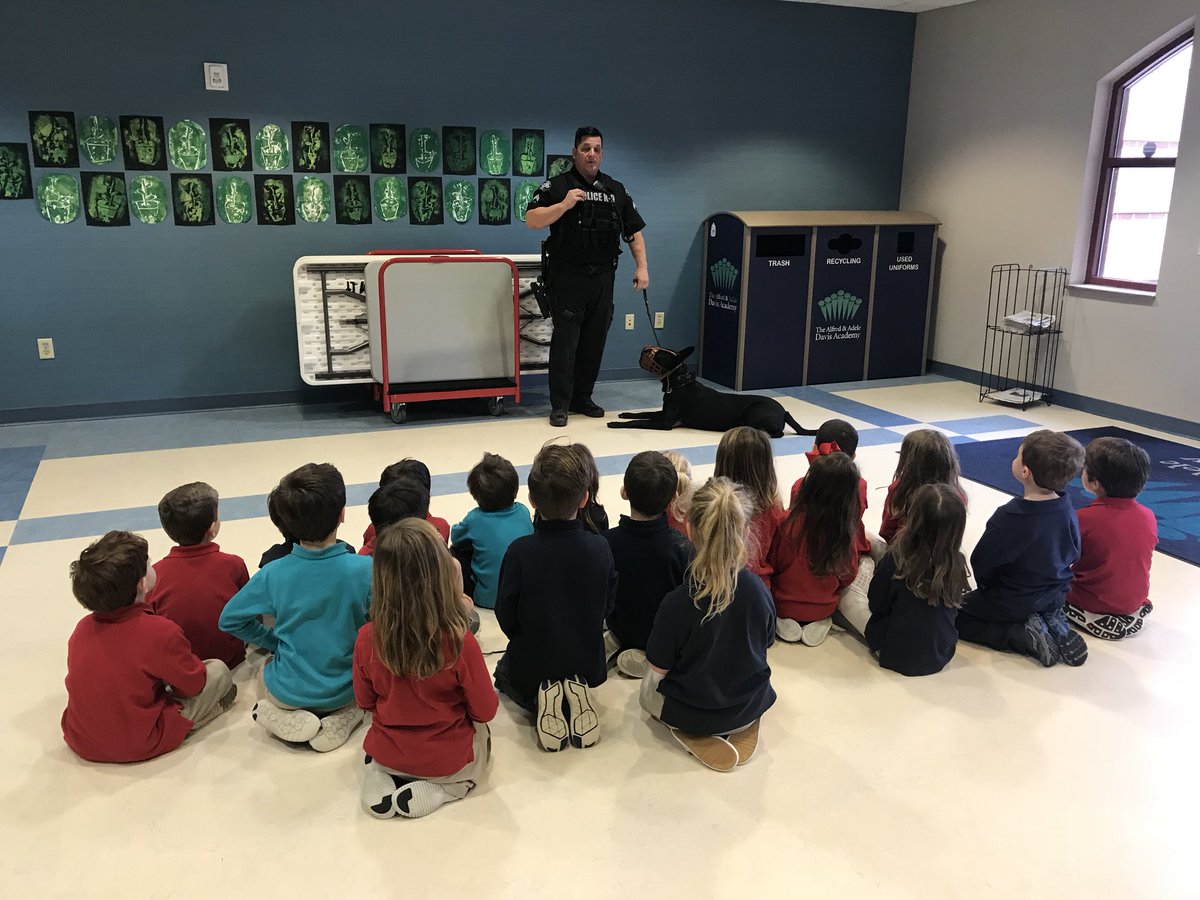 |
| A visit from the bomb squad to learn how heroes protect our community |
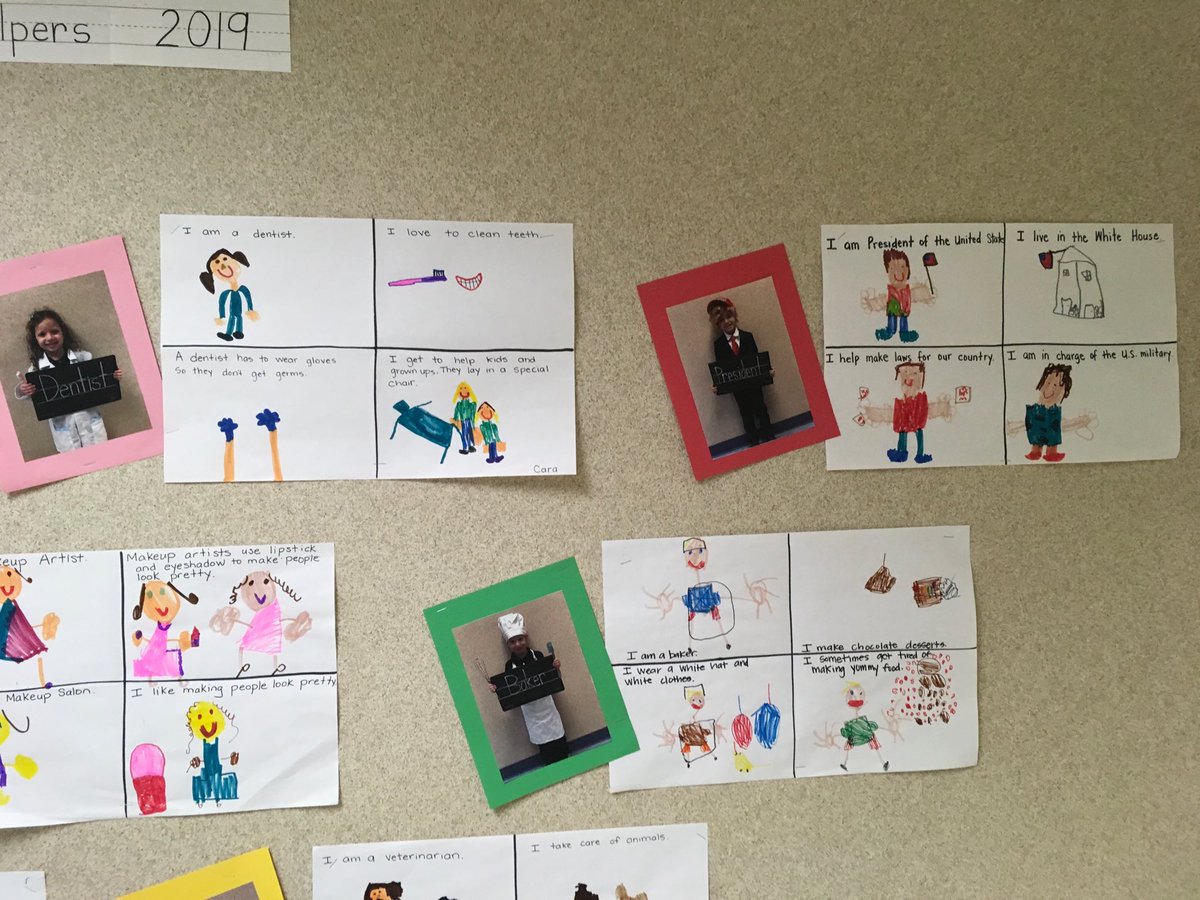 |
| Storyboards for their Film |
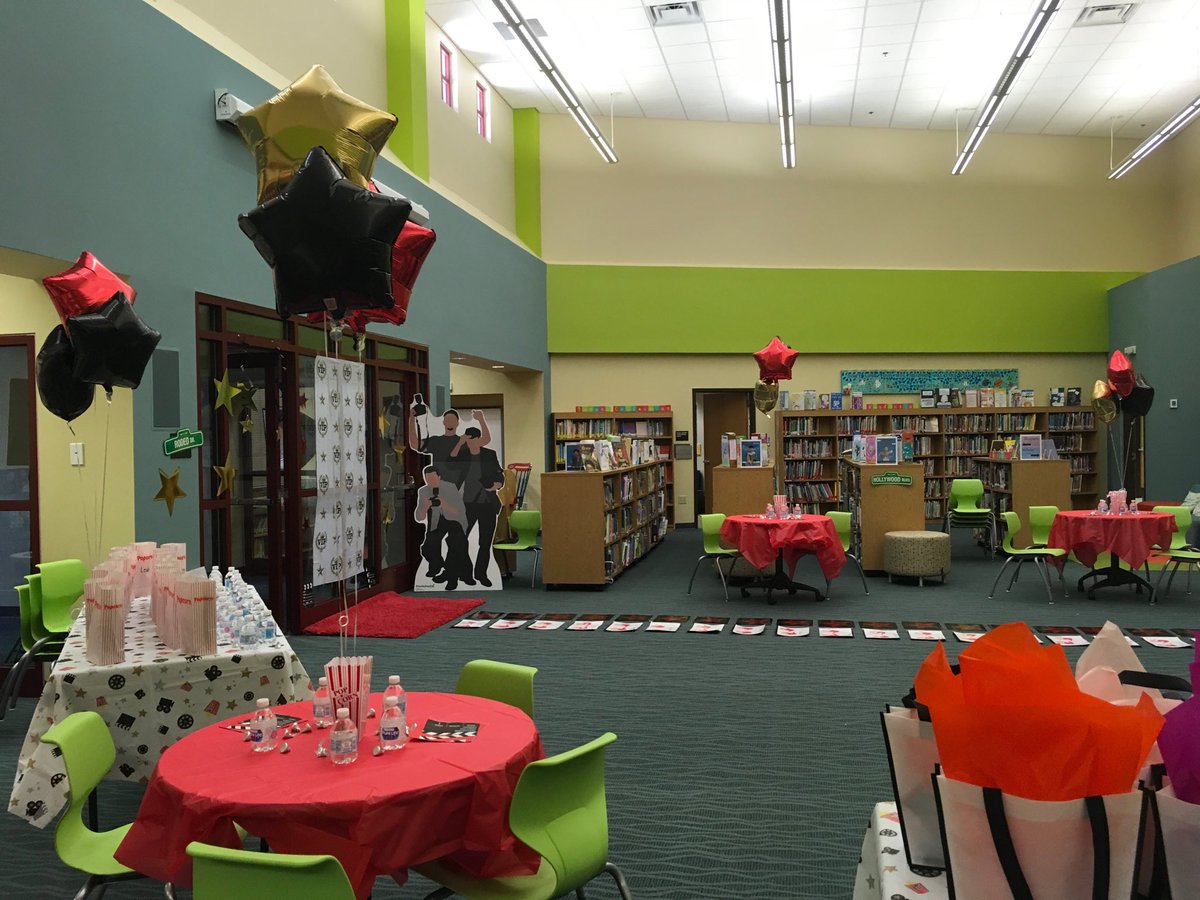 |
| Media Center= Home of the Prelude to a Star Studded Event |
 |
| Clips from the Community Helper Film |
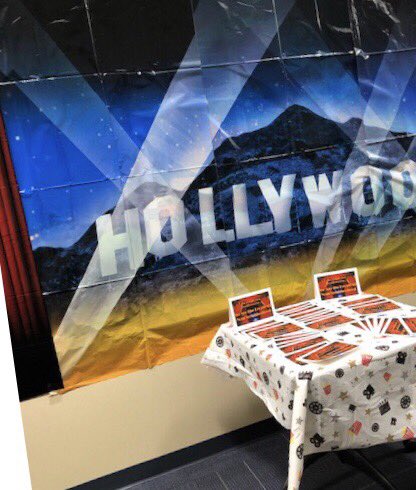 |
| Grab a program! |
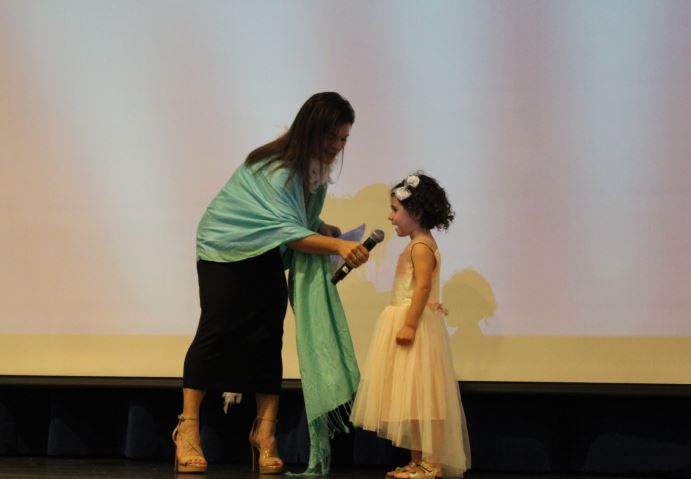 |
| Star struck as she gets ready to accept her Oscar for her role in playing a chef. |
After the film screening, each star receives an Oscar for their grand performance. It is an affair to remember and one that they do not soon forget.
Monday, December 10, 2018
KinderPod Podcast Series
Kindergarten students at The Davis Academy went app-smashing this month to create their very own podcast series, which they voted to name KinderPod. The goal of the podcasts is to share tips and tricks on how to be successful in Kindergarten. These students have learned a lot in their first half of the year and thought it only fair to share with the world. After all, future Kindergartners can benefit from their words of wisdom. Former Kindergartners can benefit by reflecting on the good old days in Kindergarten. The podcast creation process was exciting.
We started by me bribing the Kindergarten teachers to join me in this project. Not really but I was prepared to do that. Luckily, I have built an escrow account of trust with these brave teachers who are willing to work with me and try something different and innovative as a collaborative partnership. Innovation happens every day in Kindergarten but sometimes joining forces can create magic. After ensuring teacher buy-in, we met as a class and I provided an overview of what we would be doing together in the coming weeks. I had a fifth-grade Network Sherpa, who is a Technology student leader, create a sample so that the Kindergarten students would be able to visualize the end product. Here is her sample:
She did a great job, right?! The Kindergartners were inspired after watching her podcast. We walked through the entire process, which you can view here. I created a Teacher Cheat Sheet to make it easy when we broke out into small groups to accomplish our daily goal. The process started by voting on a podcast series name and then learning about all of the different applications that we would be using to create our end product. During this visit, we also worked on the tactile part of the process to ease us into the idea of podcasting. Students were able to create original artwork with their faces on it to use as their podcast visual. We spent one class period learning how to create a storyboard. Students could choose if they wanted to write text, draw illustrations, or do a combination of both to outline what they would say during their audio recording. Once our storyboards were complete and our ideas were freshly organized in our minds, we spread out to start recording. Some students went into our professional audiovisual production studio, some recorded in our innovation and design studio and others used the atrium to our theatre as a cozy recording spot. We spent another class period learning how to create our own music in Garageband and upload it to our audio recordings within the Book Creator app. We also spent time designing our podcast logos, typing the text for our podcast name, and selecting our fonts. The design process allowed us to be very creative. Through the process of app smashing, we put all of our work together and had a complete KinderPod podcast channel filled with expert advice on how to rock it in Kindergarten. To listen to our complete podcast series via Padlet, click here. In addition to being our own content creators, we learned how to use multiple applications: the camera app, the Garageband app, the Book Creator app, not to mention how to storyboard and organize our ideas.


Podcasting rocks and so does being in Kindergarten. To discover one of the reasons that Kindergarten rocks, listen for yourself:

We started by me bribing the Kindergarten teachers to join me in this project. Not really but I was prepared to do that. Luckily, I have built an escrow account of trust with these brave teachers who are willing to work with me and try something different and innovative as a collaborative partnership. Innovation happens every day in Kindergarten but sometimes joining forces can create magic. After ensuring teacher buy-in, we met as a class and I provided an overview of what we would be doing together in the coming weeks. I had a fifth-grade Network Sherpa, who is a Technology student leader, create a sample so that the Kindergarten students would be able to visualize the end product. Here is her sample:


Podcasting rocks and so does being in Kindergarten. To discover one of the reasons that Kindergarten rocks, listen for yourself:
Wednesday, October 10, 2018
Water, Water, Everywhere...Well, Not Exactly
Each year, our first grade students learn about the value of water. They explore the water cycle, scarcity, and do interesting experiments to understand how water impacts our world. Last year, we had the good fortune of Skyping with Splash.org, a devoted group of individuals based in Seattle, Washington but with a team all over the world, working together to bring clean water to children. They really brought to light the efforts that are occurring to ensure that access to clean water is an obtainable goal around the world. We learned about girls who are at a disadvantage having to walk to clean water sources to supply water to their family. We learned about children the same age as our first graders who are so much like us but are suffering for lack of access to clean water. We discovered a variety of different water filtration systems that have been invented to help in these efforts.
We were so inspired by these stories, very different from our own, that we created our own prototypes of water filtration systems. One of my favorite prototypes involved an apparatus that took condensation from clouds to create access to clean water. Each of the groups shared valuable ideas and worked together toward this common goal.
This week, we launched our 2018-2019, water initiative by creating a lesson for the first graders to understand water scarcity through an experiential activity. We signed on to join the Junior Water Walkers, which inspires children to learn about water scarcity, adopt a body of water, protect the water, and finally to walk the water. In an effort to learn more about water scarcity, we shared Joanne Robertson's book, The Water Walker, which tells the original story of Nokomis Josephine Mandamin's Native American culture and the valuable role that waters plays and how her culture works to respect water. The last line of the book ends with "What are you going to do about it?". The hope is that it will inspire students to social action.

Following the telling of Josephine's powerful story, students were put into seven groups and given a "home base". Each individual within the home received a bucket and were assigned a body of water (a section of blue butcher paper laid out on the floor) that they had to journey toward. It was a long walk to their assigned body of water! After all, they had to get to a clean water source, one that was not littered with trash. After reaching their water source, there was so much water in it but their bucket was only so big so they could only fit four drops of water in the bucket. Each water drop represented something different. For example, they could choose a water drop that specified water for brushing teeth, watering a garden, taking a bath, cooking food, drinking water for pets, and more. However, they could only choose four uses for their water as that is all they could contain in their bucket. The decision making was not easy. After they filled their buckets, they journeyed back to their home base. In small groups within their "family", they shared their water selection choices and discussed why they chose what they did, how they prioritized, and what was difficult to leave behind. After having our family meetings, as a larger group, we discussed what we would do tonight to help preserve water. The suggestions were fantastic: turn off the water while brushing our teeth, don't flush the toilet every time when it isn't necessary, and only fill our water glasses with the amount water that we know we will drink because we can always come back for more.


We were so inspired by these stories, very different from our own, that we created our own prototypes of water filtration systems. One of my favorite prototypes involved an apparatus that took condensation from clouds to create access to clean water. Each of the groups shared valuable ideas and worked together toward this common goal.
This week, we launched our 2018-2019, water initiative by creating a lesson for the first graders to understand water scarcity through an experiential activity. We signed on to join the Junior Water Walkers, which inspires children to learn about water scarcity, adopt a body of water, protect the water, and finally to walk the water. In an effort to learn more about water scarcity, we shared Joanne Robertson's book, The Water Walker, which tells the original story of Nokomis Josephine Mandamin's Native American culture and the valuable role that waters plays and how her culture works to respect water. The last line of the book ends with "What are you going to do about it?". The hope is that it will inspire students to social action.
Following the telling of Josephine's powerful story, students were put into seven groups and given a "home base". Each individual within the home received a bucket and were assigned a body of water (a section of blue butcher paper laid out on the floor) that they had to journey toward. It was a long walk to their assigned body of water! After all, they had to get to a clean water source, one that was not littered with trash. After reaching their water source, there was so much water in it but their bucket was only so big so they could only fit four drops of water in the bucket. Each water drop represented something different. For example, they could choose a water drop that specified water for brushing teeth, watering a garden, taking a bath, cooking food, drinking water for pets, and more. However, they could only choose four uses for their water as that is all they could contain in their bucket. The decision making was not easy. After they filled their buckets, they journeyed back to their home base. In small groups within their "family", they shared their water selection choices and discussed why they chose what they did, how they prioritized, and what was difficult to leave behind. After having our family meetings, as a larger group, we discussed what we would do tonight to help preserve water. The suggestions were fantastic: turn off the water while brushing our teeth, don't flush the toilet every time when it isn't necessary, and only fill our water glasses with the amount water that we know we will drink because we can always come back for more.


To conclude the water launch, we watched a clip from the short film When A Town Runs Dry produced by Joris Debeij and shared by the Global Oneness Project. The film is told from the perspective of a farmer, a high school football coach, and a grocery store owner, each of which share their story of how their central California town is impacted by a water shortage. We recognized that water shortages are not just an issue in third world countries but can impact us right here in the United States, again begging us to ask the question, "What are you going to do about it?".
Just as water is part of a natural cycle, we will circle back to water again. Our eighth graders this year will participate in a One Book, One Read program reading A Long Walk to Water by Linda Sue Park. We strive to inspire our community to take social action and hope that the exposure to these stories will move our students to do something about it.
Thursday, September 27, 2018
It's Surreal: Virtual Reality Meets Nursery Rhymes
 |
| Humpty Dumpty Sits on a Wall, with All the King's Men Nearby |
With Google Cardboard, an iPod, and access to 1st Playable Production's YouTube creation of The Three Little Pigs in virtual reality, students were able to experience the story of The Three Little Pigs. Once students experienced virtual reality in a world that was created by someone else, they were motivated and inspired to create their own. Their creations were unique and symbolic. A lot of thought went into their final products.

Being able to display their projects on the Promethean board in play mode was an amazing opportunity too. Students were able to narrate their virtual reality nursery rhyme in front of a larger audience by mirroring their work from the iPad using Air Server. Essentially, they became the "tour guide" of their own story for a wider audience.

The teachers and the students loved hearing what went into each child's creation process. It's fascinating to discover the story behind the story. They shared how they decided to include specific structures, characters, and what inspired their environmental choices, such as weather and scenery.
Wednesday, September 26, 2018
Mystery Skyping: Comparable to an Air Traffic Control Tower
We had a blast today mystery skyping with a class in Virginia! We won't tell you what city they were in because well, that was the hardest mystery to unravel. Who knows, you may find yourself mystery skyping with them one day and I wouldn't want to take away the fun. Our 5th grade students loved it. We follow the mystery skype process that I refer to as "Paul Solarz style". He is a master at crafting an environment that becomes organized chaos. Similar to an air traffic control tower. Every student knows their role and responsibility, some of which are limited to themselves and some of which are shared responsibilities. While doing our part, we try our best not to run into each other. Somehow it all works out.

We always have a dress rehearsal at which time we review the roles, choose our parts (or in some cases have them assigned if necessary), learn the importance of mystery skype netiquette, and brainstorm examples of "good" questions that aren't too direct but also help us beat the clock to discover where the other students are located before they figure out where we are located. We even have assigned places within the room so that we each have a home base for our jobs. Jobs include Atlas researchers, Google Earth explorers, a task master, a greeter, a closer, the question askers, the runner, and more. Regardless of one's job, everyone has the opportunity to research and submit possible questions.

The day of the mystery Skype typically involves covering up our school name and logo information found on our clothing. We file in quietly, assume our positions, and connect virtually with the other class. Even those students and bystanders (sometimes we have classroom visitors) who don't think they will get caught up in the energy, can't help themselves. Before we know it, we are all working feverishly to discover the location before they discover ours. It's high energy, anxiety provoking, totally focused, crazy fun. We love it! If you haven't done one yet, be brave and try it. You won't regret it!


We always have a dress rehearsal at which time we review the roles, choose our parts (or in some cases have them assigned if necessary), learn the importance of mystery skype netiquette, and brainstorm examples of "good" questions that aren't too direct but also help us beat the clock to discover where the other students are located before they figure out where we are located. We even have assigned places within the room so that we each have a home base for our jobs. Jobs include Atlas researchers, Google Earth explorers, a task master, a greeter, a closer, the question askers, the runner, and more. Regardless of one's job, everyone has the opportunity to research and submit possible questions.

The day of the mystery Skype typically involves covering up our school name and logo information found on our clothing. We file in quietly, assume our positions, and connect virtually with the other class. Even those students and bystanders (sometimes we have classroom visitors) who don't think they will get caught up in the energy, can't help themselves. Before we know it, we are all working feverishly to discover the location before they discover ours. It's high energy, anxiety provoking, totally focused, crazy fun. We love it! If you haven't done one yet, be brave and try it. You won't regret it!

Tuesday, September 25, 2018
Light Up Someone's Day with Light Up Pill Boxes
Last year, I had the pleasure of moderating a panel with Gina Seymour focusing on diversity in Maker Spaces at SxSWEDU. I am a fan of her recent book, Makers with a Cause, which inspired me to try out a new project during a recent Maker Monday. Students designed and created light up pill boxes to donate to an elder care facility not far from our school.
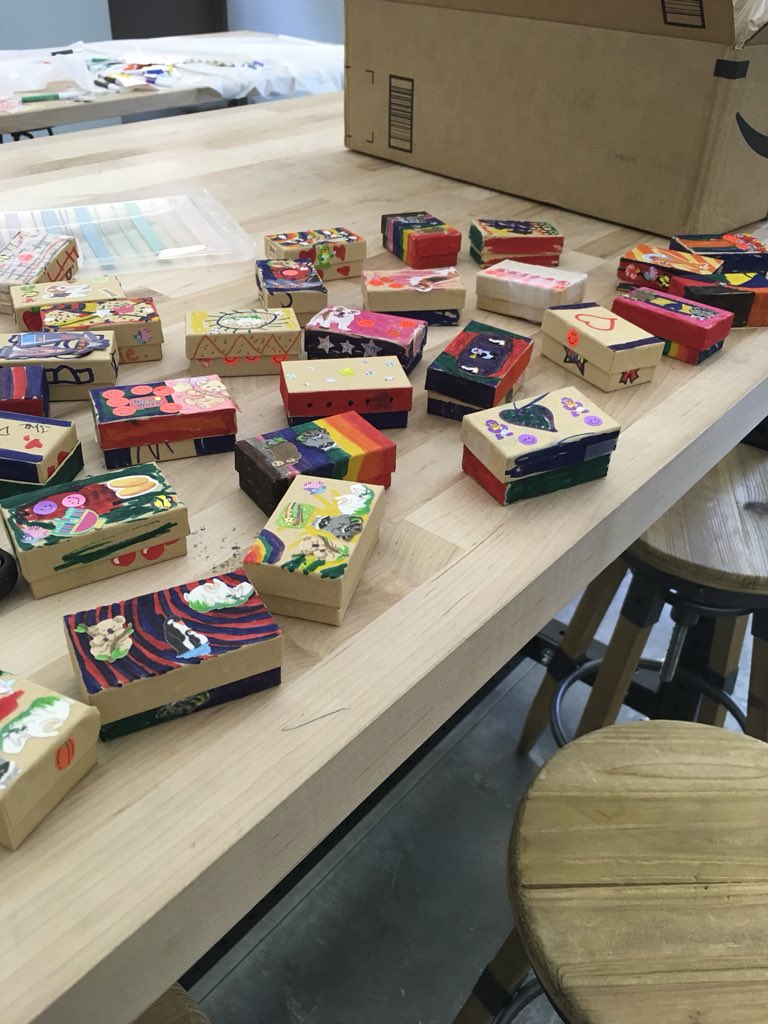
The supplies needed for this project included the following:

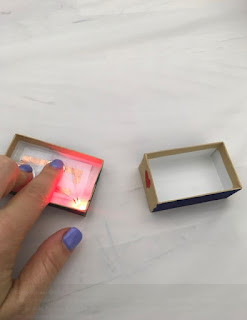


The supplies needed for this project included the following:
- Lithium batteries
- LED lights
- Copper tape
- LilyPad button board
- Small boxes
- Markers
- Stickers
- Scotch Tape


First, students decorated their boxes with craft supplies. I discovered some old stickers in our library cabinets and brought in a large box of washable markers to spark creativity. Then, using a template, students put together their circuit and embedded a button to allow the light to turn off and on. In order to facilitate the process, we pre-cut small pieces of paper for students to be able to assemble the technology to easily fit within the lid of the pill box.
In order to ensure the batteries would not drain, we incorporated the LilyPad button so that pill box users could turn the lights on and off, as needed. Younger students received some help from myself and our media assistant, Lisa Pritchett, to put their circuit together.

This was a great project for students in kindergarten through fifth grade because the little ones could spend their time decorating the boxes and learning about the technology within them. Meanwhile, the second graders and up could spend time decorating their boxes and putting together the technology to install within the box lids.

After creating 48 pill boxes on Maker Monday, a group of second grade students were able to deliver them to the residents at Somerby Sandy Springs, an elder care facility not too far from our school. We arrived during breakfast and the residents could not have been happier to see us. The students handed out the pill boxes, explained the technology component and how to turn on the lights, and visited with the residents.

We were pleasantly surprised to discover that one of our fourth grade teacher's grandmothers is a resident there and delighted in meeting her. What a treat for us all!

Thursday, August 16, 2018
Coding with Little Learners
Problem-solving and learning to be comfortable not having all of the answers is a key component to coding as a playground. We don't have a playbook for playing on the playground. We decide to explore objects on the playground by trial and error. We are also social creatures. Rather than playing silently on the playground, we connect, collaborate, and discover together. The approach to coding with little ones is similar. Working in small groups, we learn to solve problems together by sharing ideas, trying out potential solutions, and reworking our attempts to move forward.
To help us in these efforts, we have acquired some new technology. Some of these tools include the Cubetto, Beebots, and Osmo. Integrating these tools into the lessons to reinforce the concepts allows the students to engineer their own learning. As we learn more about the world around us within the framework of coding, we will ultimately produce our own unique projects using the design process shared below. Learners can approach this design process by jumping in at any phase of the project and working from there. It is a flexible learning experience.

Working in groups of four to five students, on our second day of school, we walk through Cubetto's world on his second day. We explore the environment around us, learning how to get from point A to point B, just like we are learning to do this first week.
 |
| Students orienting Cubetto to help the robot get where it needs to go |
 |
| Students gain confidence through trial and error |
Students celebrate their success!
This week, learning with Cubetto taught us to persevere, have grit, be creative, and to have fun. Our students can't wait to see what (or who) will be waiting for them next week. We look forward to learning right along their side.
Tuesday, May 22, 2018
Coding as a Language & Design Challenges
I have embraced the merging of maker activities with literacy. I came across this fantastic series called Hello Ruby by Linda Liukas. Her books tell a fun story that take kids on a mystery-filled adventure while weaving in coding analogies with perfect stopping points throughout the story for mini-hands on design challenges.

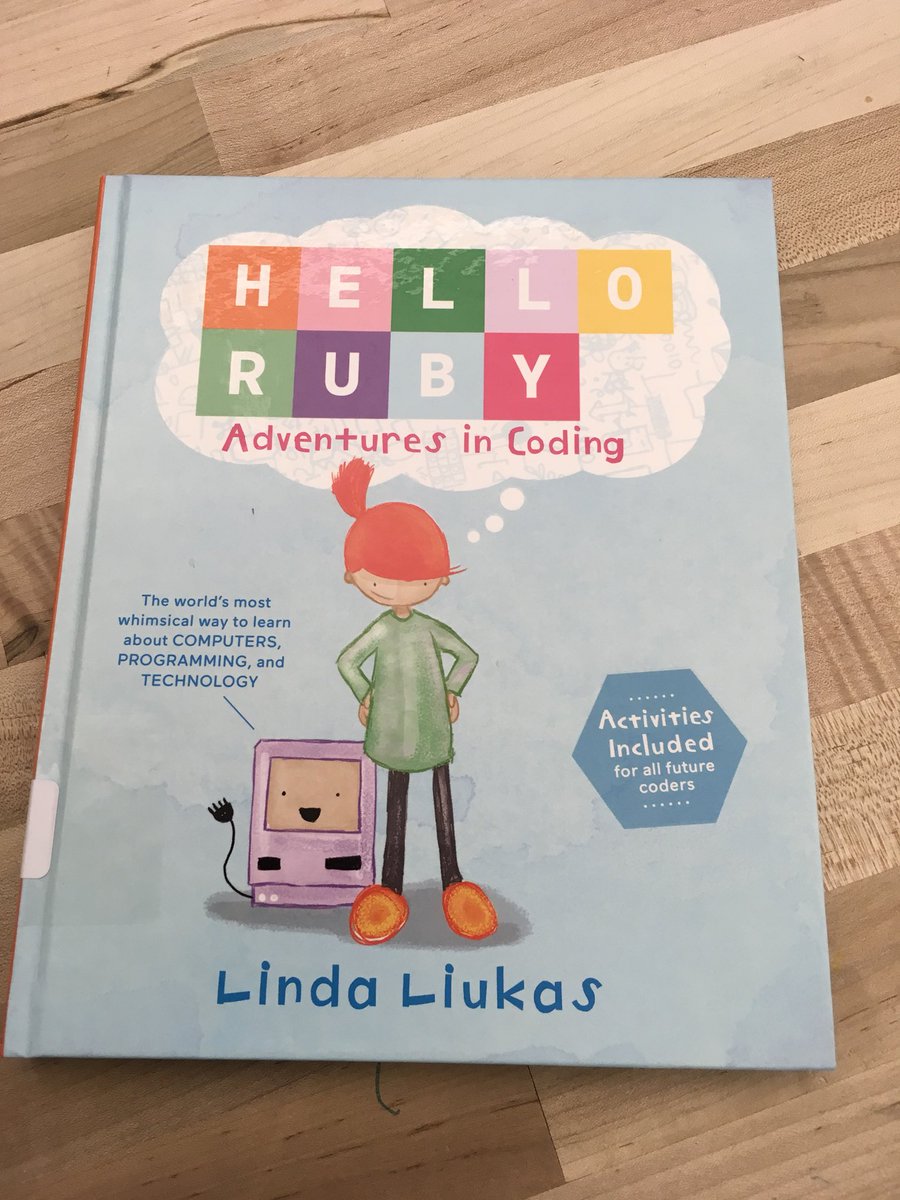
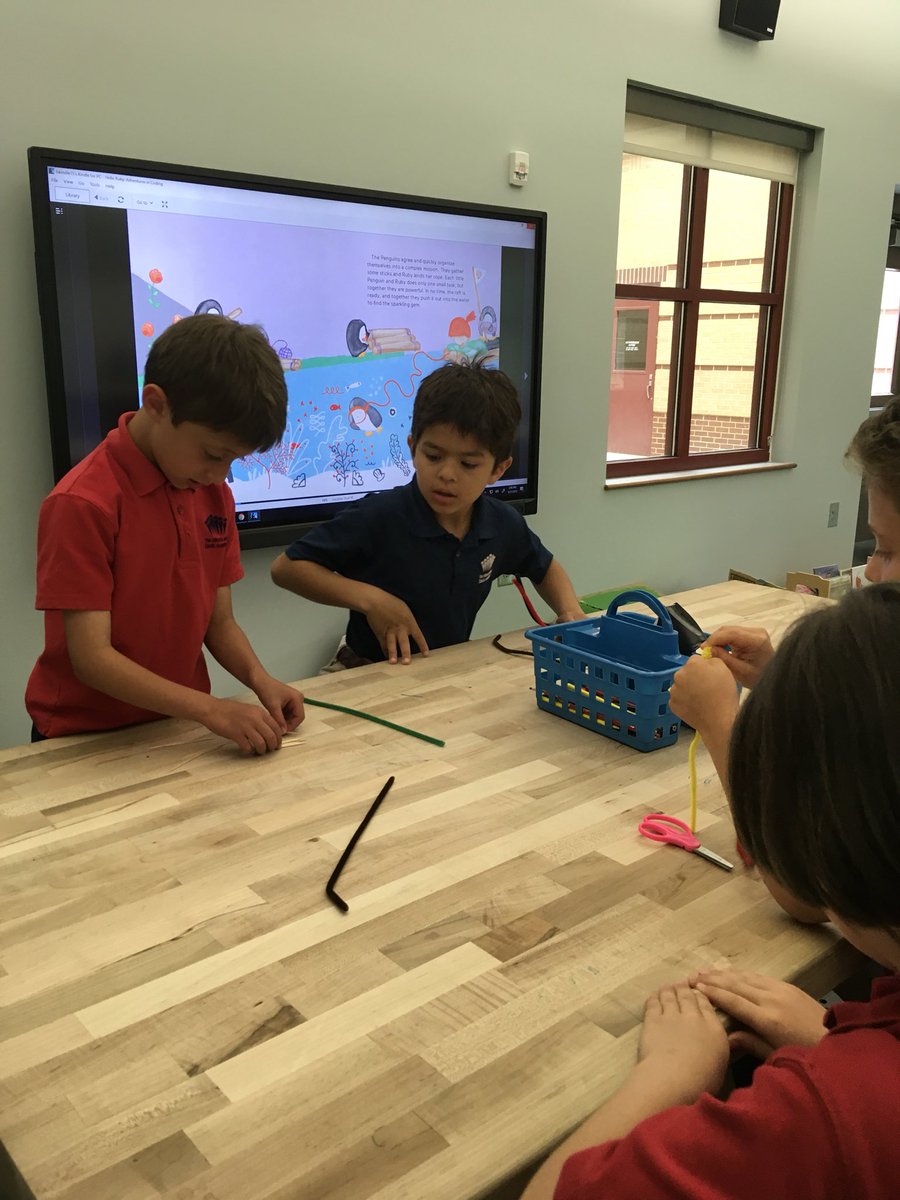
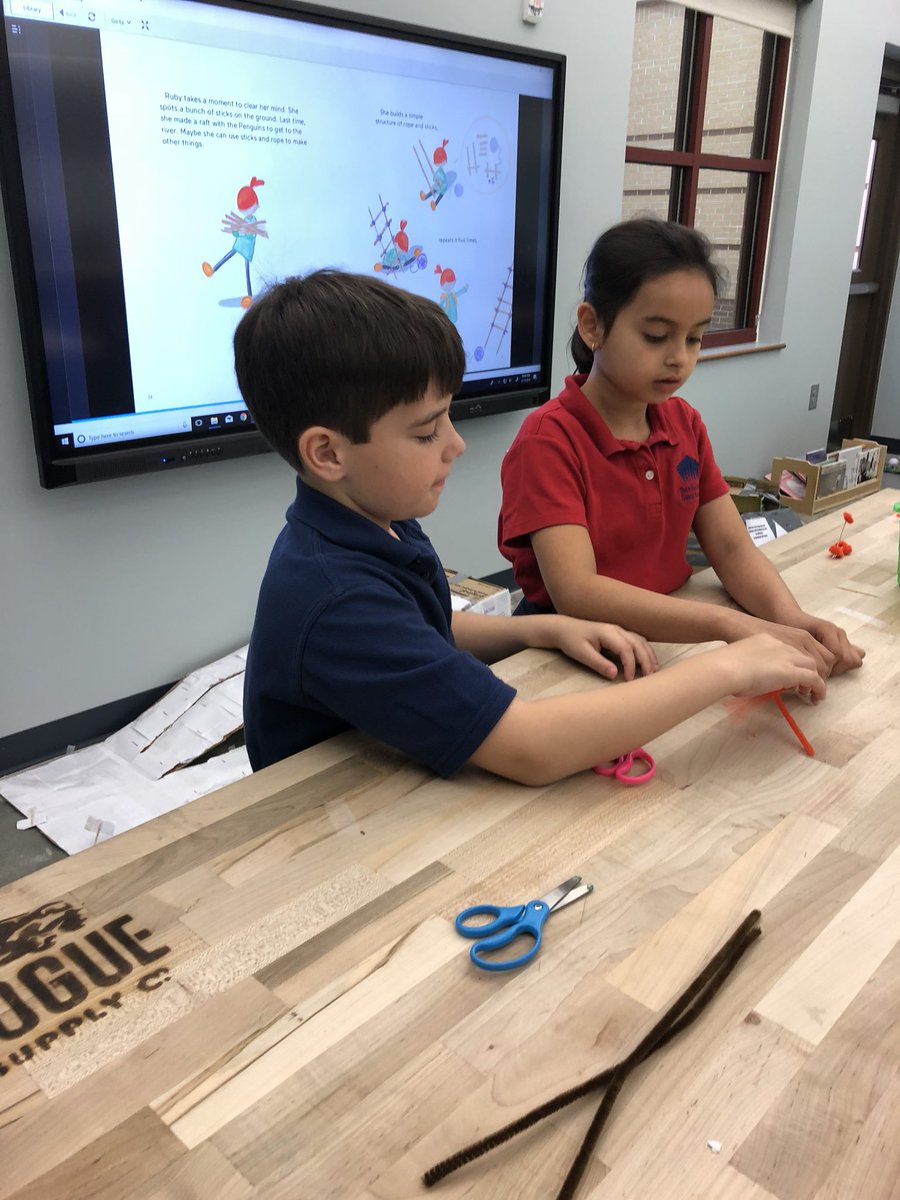
All of these questions arise as students pause throughout the story and work together to accomplish their design challenges while learning new coding concepts. After each design challenge, we take time to reflect on our process so far: What was easy? What was challenging? What would we do different next time? Would this have been easier or harder with or without a team? As we consider what we have learned along the way, we learn to persevere.

Having purchased an ebook copy of the book, I shared the story in increments with the students. Ruby is on a quest to find a total of five gems left behind by her father while he is away on a business trip to help keep her occupied and to know that he is thinking of her. As Ruby journeys through the forest and meets interesting characters that teach about collaboration, loops, variables, debugging, and more, we pause throughout to attempt mini-maker challenges in seven minute increments to help Ruby along on her journey.
First, students are tasked with building a raft to help her get across the river. With only fourteen toothpicks and two pipe cleaners, resources are scarce. Working in pairs, students have seven minutes to build their raft with these limited resources. Can they do it?
As the story continues, Ruby realizes she needs a ladder to reach one of the higher gems. Again, students are challenged to build a ladder with only nine toothpicks and two pipe cleaners. No tape allowed. This is probably the most difficult task.
Finally, Ruby makes it to the river but realizes she needs to build a bridge to make it across. To do so, she can use six toothpicks and two pipe cleaners. Did she think to anchor her bridge to the bank of the river?
All of these questions arise as students pause throughout the story and work together to accomplish their design challenges while learning new coding concepts. After each design challenge, we take time to reflect on our process so far: What was easy? What was challenging? What would we do different next time? Would this have been easier or harder with or without a team? As we consider what we have learned along the way, we learn to persevere.
Third graders loved meeting Ruby and discovering how to collaborate to achieve their goals so that Ruby can obtain all five gems. In the end, Ruby learns that it isn't the gems that matter but rather it is the journey itself that becomes meaningful as she discovers how to work with others and make new friends. Interestingly, the students seem to reach the same conclusion.
Wednesday, May 9, 2018
Clubbing at The Library

In our library, we like to go clubbing. Or rather, create clubs. Over the course of my eleven years at The Davis Academy, we have hosted clubs of many sorts: book clubs (with multiple variations), newspaper clubs, comic clubs, gaming clubs, technology clubs, and social emotional development clubs. Once we have an official name for a club, we are off to the races with planning and programming. The library media center is the ideal spot for clubbing. With a little creativity and a lot of passion, a club can go a long way in cultivating a strong community vibe.
I have discovered over the years that the popularity of various clubs ebbs and flows based on current cultural climate, parental influence, and student passion. What worked five years ago may not work now. For this reason, our clubs are constantly in flux from year to year.

Our Technology club, dubbed The Network Sherpas, started with six members (one girl and five boys) and now extends onto two campuses with a total of twenty-seven members (40% girls and 60 % boys). It's only been around for two years and yet as the participants grow, the opportunities expand. What was once an insular club that remained within the confines of the school walls now has evolved into students presenting at conferences and taking innovative field trips.
Starting small is smart. Taking a pulse on where students interests lie and being flexible to incorporate those interests into the experience is rewarding. Tomorrow marks our final end of year event for our 2017-18 Network Sherpas. The hope is that they will be inspired to continue serving as technology leaders and experts, serving a wider community and sharing their knowledge with a constant drive to keep learning.
Thursday, May 3, 2018
Tinkering Tuesday: Food Truck Frenzy
As the year has progressed, I have created Tinkering Tuesday, a spin off of Maker Monday, yet geared toward our four and five year old makers. I tailor our maker activities to make them accessible to younger learners while also allowing more time for exploration and creativity. Maker Monday is in 25 minute time slots whereas Tinkering Tuesday is 50 minutes. As entrepreneurship is becoming more commonplace in education at the elementary and middle school levels, students are discovering their inner entrepreneurial spirits. Nurturing this spirit opens the door for so many creative learning opportunities.
I love the Food Truck Mindset that John Spencer uses to discuss innovation in schools. I appreciate his description of how food truck owners have to learn to empathize with the communities in which they are serving to be most successful. This idea created a springboard for a recent Tinkering Tuesday.
I am constantly looking for ways to tie in our faith-based values into the special programs that our media department offers. Empathy is a central component to being a mensch, or a righteous person. When we take the time to work toward understanding others, we are instilling menschkeleit values. This is similar to the food truck approach: seeking to understand a community grows our level of empathy. On Tinkering Tuesday, I used the Food Truck Mindset to make this connection with students launching their own food truck business.
Students had a buffet line of items to consider in developing their food truck business: menu items, a list of necessary supplies, coupons to create, flyers to advertise the food truck, a catchy food truck design, and then finally the ability to make the food truck itself as a paper toy.
There was so much for the students to take into consideration throughout this process. First, who is the intended audience and therefore, what type of food should be served? Where will the ingredients come from: local farmers (another way to support the community) or will ingredients be outsourced from larger suppliers? How will the business be advertised most effectively? How will it be set apart from pre-existing restaurants? What will make the menu unique and yet, appealing? What is the best way to formulate a list of the supplies that will be needed in the food truck (list making is an important curation skill)? What designs will catch the community's attention? Setting a goal and walking through the steps to achieve that goal proved to be a worthwhile accomplishment.
Whether it is Maker Monday or Tinkering Tuesday, I have discovered that students love activities that allow them to take home their creations. Our youngest makers call these "take aways". Students value take aways so that they can show off their work. In this activity, students took home their food trucks as well as the accompanying materials. While not every project involves a physical take away, I love that the process, just as much as the product, generates a take away.
I love the Food Truck Mindset that John Spencer uses to discuss innovation in schools. I appreciate his description of how food truck owners have to learn to empathize with the communities in which they are serving to be most successful. This idea created a springboard for a recent Tinkering Tuesday.
I am constantly looking for ways to tie in our faith-based values into the special programs that our media department offers. Empathy is a central component to being a mensch, or a righteous person. When we take the time to work toward understanding others, we are instilling menschkeleit values. This is similar to the food truck approach: seeking to understand a community grows our level of empathy. On Tinkering Tuesday, I used the Food Truck Mindset to make this connection with students launching their own food truck business.
Students had a buffet line of items to consider in developing their food truck business: menu items, a list of necessary supplies, coupons to create, flyers to advertise the food truck, a catchy food truck design, and then finally the ability to make the food truck itself as a paper toy.
 |
| Buffet of Items to Consider for Creation of Food Truck Business |
 |
| Business Card Design |
 |
| Menu Items |
 |
 |
| Food Truck Designs |
Whether it is Maker Monday or Tinkering Tuesday, I have discovered that students love activities that allow them to take home their creations. Our youngest makers call these "take aways". Students value take aways so that they can show off their work. In this activity, students took home their food trucks as well as the accompanying materials. While not every project involves a physical take away, I love that the process, just as much as the product, generates a take away.
Subscribe to:
Posts (Atom)